
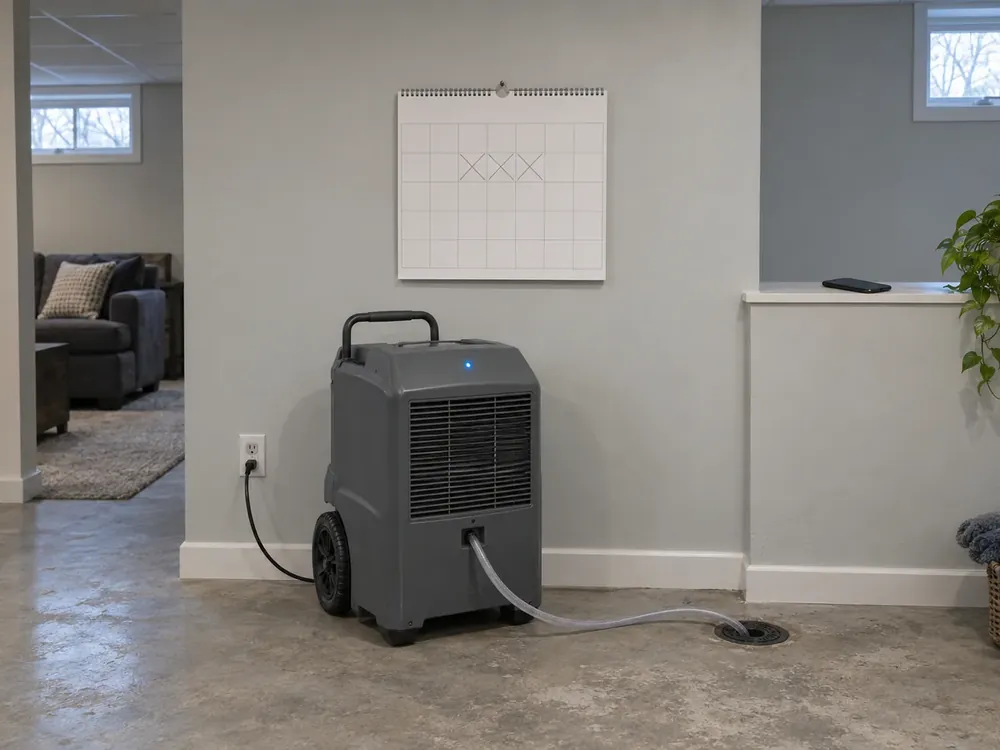
Across the first week, expect drying to follow the condition of the materials rather than a fixed completion date. EPA describes drying after a flood as commonly taking several days to weeks. A small plumbing leak and a deeply flooded room need different assessments. The outline below shows the sequence of work, without setting an arrival or finish deadline.
Day one: extract water and establish a starting point
On the first workday, your technician assesses the wet materials and establishes the drying scope after safety hazards are addressed. Standing water needs removal before the remaining moisture can be managed. The assessment should distinguish the visible wet area from the places where moisture has moved.
Ask which rooms and materials appear in the written scope. Include flooring, wall cavities and cabinets when the inspection identifies them as affected. Photographs and initial readings give you a record to compare with later checks.
Once contamination and safe power use have been addressed, drying equipment can be selected for the affected space. Air movement and dehumidification serve different purposes. Air movement helps evaporation; dehumidification removes moisture from the air. A room can feel less humid while its building materials still need drying.
Days two to four: review progress and drying access
Across days two to four of active drying, repeat checks help show whether the plan is reducing moisture. Your technician can explain where readings are improving and where moisture remains. Those days are a checkpoint window, rather than proof that the work will be finished.
For clean-water damage, EPA guidance allows drywall with no obvious swelling and intact seams to dry in place. Otherwise, ask your technician to assess removal. A closed cavity may need drying access. Subflooring also needs attention when carpet or another floor covering has become wet. Ask your technician to explain any proposed opening before it is made.
Keep equipment controls and placement as your technician directs. Report an alarm, loss of power or new water promptly. If equipment affects access to an essential room, discuss a workable arrangement instead of moving it without guidance.
During drying: identify what is slowing progress
During drying, trapped moisture, renewed leaks and humid air can slow improvement. The drying plan needs to address the reason a material remains wet. More elapsed time alone doesn't solve continued water entry.
Use a short progress checklist during each discussion:
- Ask whether the original water source is controlled.
- Ask which materials still have elevated readings.
- Ask whether cavities or floor layers need better access.
- Report equipment interruptions and newly visible water.
- Ask what the next moisture check needs to establish.
EPA notes that vapor barriers can restrict moisture release from building materials. Warm, humid outdoor air can also slow drying. Your technician should explain whether windows stay closed or open under the current plan. Follow the agreed instructions instead of treating outdoor ventilation as an automatic shortcut.
First week: judge completion by materials
By the end of the first week, review the moisture record before agreeing to refinishing or closing an affected cavity. A dry-looking surface doesn't establish that the material beneath it is ready. EPA recommends moisture meters to check walls and flooring before refinishing.
Ask which materials were checked and which remain unresolved. Keep the final drying record with your photos and written scope. If a room still needs drying, ask what work continues and when progress will be checked again.
After drying: how long does water damage restoration take?
After drying, the remaining cleanup and rebuilding scope determines the rest of the restoration timeline. Extraction and drying are stages within that larger process. Material removal, replacement and finish work may follow on separate schedules.
Repair stage: how long does water damage repair take?
At the repair stage, the materials needing replacement and the work involved determine the schedule. Review the planned repairs after the drying assessment. The restoration cost guide explains the scope factors that affect pricing without treating equipment days as the whole job.
First day: how long does it take for mold to grow?
From the first day, mold risk depends on moisture and conditions, so there is no exact growth deadline for every wet room. EPA recommends addressing wet materials within 24–48 hours to reduce the risk. Its guidance also cautions that the range is not an exact growth threshold.
Call now when you discover water. Discuss extraction and structural drying, then follow measured progress. A calendar helps track the work; moisture checks determine whether affected materials need more attention.