First hour: describe the water
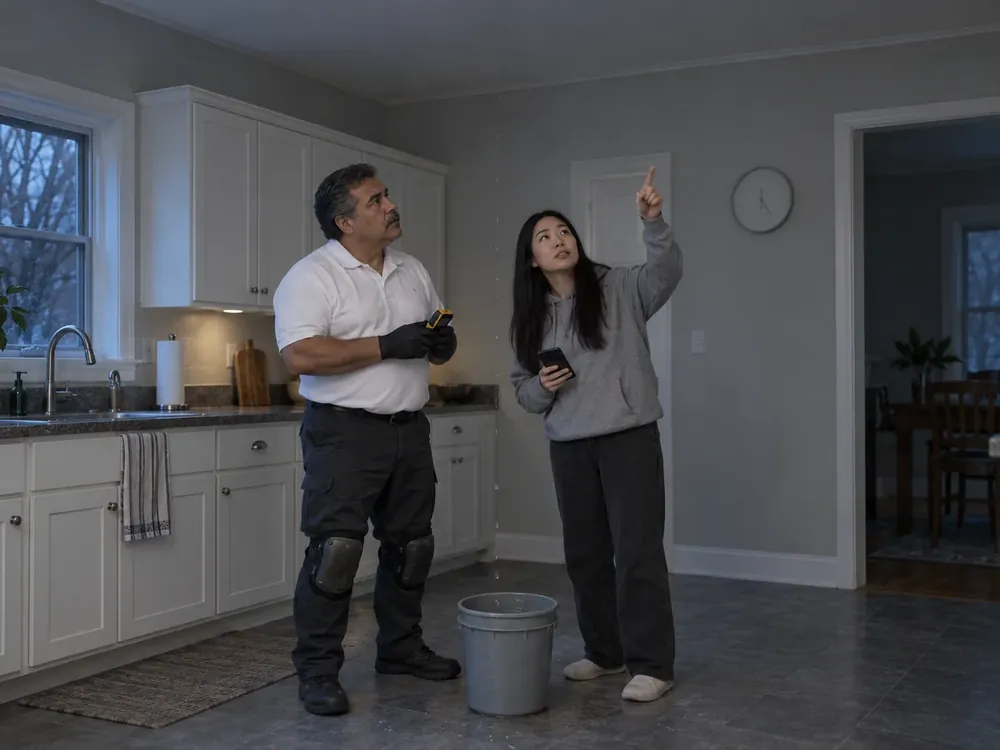
In the first hour after finding water, call and describe the damage from a safe place. You can start with a wet ceiling, an overflowing appliance or standing water downstairs. Give the address and say whether water is still entering. Mention a sagging ceiling, wet electrical equipment or sewage without walking into the affected area. Safety concerns shape the discussion from the start.
During the call, share anything you already know about the source and when you first noticed it. Photographs, room dimensions and a list of affected belongings are useful when readily available. You don't need to measure rooms or investigate hidden cavities to begin. A household shutoff can stop a plumbing leak if it is safe to reach and operate. For immediate danger, move away and seek emergency assistance.
After the call: arrange the inspection
After the call, one of our local restoration partners takes the request forward and sets the visit time with you. The conversation covers access to the home, the rooms involved and any ongoing source repair. Mention stairs, a separate basement entrance or a tenant who needs to provide entry. You'll know the arrangements for the visit and what the inspection will address.
First working day: define the work
On the first working day, your technician traces affected areas with moisture checks and a visual assessment. Water under a floor covering or inside insulation can require a different approach from a surface spill. The inspection establishes where extraction is needed, which materials can be dried and which damaged materials need removal. Source repairs may involve a plumber, roofer or another appropriate trade.
Before work starts, your technician explains the proposed scope, equipment plan and pricing. Discuss what the price includes, how progress is checked and how newly discovered damage changes the scope. Extraction, drying, disposal and rebuilding should be clear in the work description. Keep the written scope so you can compare the agreed work with later findings.
During drying: follow the readings
During drying, moisture measurements guide equipment placement and adjustments. Air movers and dehumidification address the wet materials identified at inspection. The technician may need access behind trim or into a damaged cavity. Ask how those openings affect the repair plan and how equipment drainage will be managed in your home.
As drying continues, follow the operating instructions and keep the equipment's working area clear. Tell your technician about returning water, a drainage problem or equipment that stops running. A quiet room or a dry surface doesn't establish that concealed materials are ready to close. The drying-time overview explains the measurements behind that decision.
First week of work: review progress
During the first week of work, progress reviews compare readings with the drying goals and identify the remaining tasks. Extraction and drying may be complete while flooring, drywall or paint still needs replacement. Reconstruction follows the approved scope and any applicable construction requirements. The schedule depends on the actual findings rather than a fixed calendar promise.
During the final discussion, keep room photographs, moisture records, the written scope and invoices as documentation for insurance. Review the source repair status and the work needed to restore damaged finishes. Call again about renewed leakage promptly so a new wet area can be assessed.